Ingrid Bergman
Three Oscars from Stockholm to Hollywood. Ingrid Bergman went from Swedish films to Casablanca and won three acting Oscars across three decades. Her career guide, from Intermezzo to Autumn Sonata.
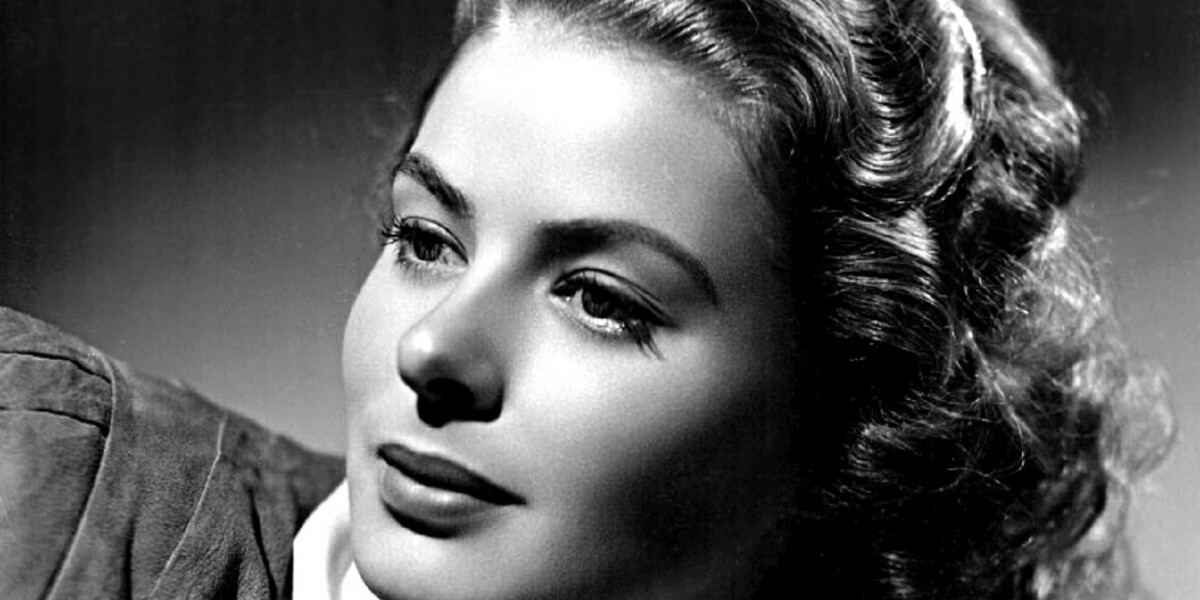
Ingrid Bergman, studio portrait: Whitey Schafer, Public domain
A Swedish beginning
Ingrid Bergman trained briefly at the Royal Dramatic Theatre school in Stockholm and was soon working in Swedish films. Her natural style, with little makeup and an open, glowing face, stood out. The Swedish romance Intermezzo (1936) caught the eye of Hollywood producer David O. Selznick.
Selznick and Casablanca
Selznick brought her to America to star in an English-language remake, Intermezzo: A Love Story (1939). Audiences liked that she seemed real rather than manufactured, and Selznick kept her image simple and her name unchanged.
On loan to Warner Bros. she played Ilsa Lund opposite Humphrey Bogart in Casablanca (1942), the role many people know her for. The film won Best Picture and has become one of the most loved in Hollywood history.
Three Oscars
Bergman won Best Actress for Gaslight (1944), as a wife made to doubt her own mind. She worked with Alfred Hitchcock on Spellbound (1945) and Notorious (1946). In the 1950s she worked in Europe for several years, then made a triumphant return with Anastasia (1956), which won her a second Best Actress Oscar.
Her third Oscar, for Best Supporting Actress, came for a small role in Murder on the Orient Express (1974). She received seven acting nominations in total.
A performer in many languages
Bergman acted in Swedish, English, Italian, German and French, and she kept returning to the stage. Her final film, Autumn Sonata (1978), paired her with Swedish director Ingmar Bergman, no relation, and brought her a final Oscar nomination. She died in London in 1982, on her 67th birthday.
Why she still shines
Bergman helped change the Hollywood idea of a leading lady, proving that warmth and honesty could be as powerful as glamour. The American Film Institute ranks her fourth among the greatest female screen legends. For a fellow European who won an Oscar in her own language, read our Sophia Loren page.
Where to start
Begin with Casablanca (1942), then watch Notorious (1946) to see her work with Hitchcock and Cary Grant. Gaslight (1944) shows the performance that won her first Oscar, and Autumn Sonata (1978) shows her at the end of her career, playing a famous pianist facing her grown daughter. Seeing the first and last films side by side shows how her natural, unforced style deepened over almost forty years.
Did you know? Bergman never changed her name for Hollywood, unusual at a time when studios renamed most new stars.
- Ingrid Bergman, studio portrait: Whitey Schafer, Public domain
Text written by Amazing Movie Star.