Toshiro Mifune
Kurosawa's explosive leading man. Toshiro Mifune made 16 films with Akira Kurosawa, starred in Rashomon and won two Venice acting prizes, bringing Japanese cinema to the world.
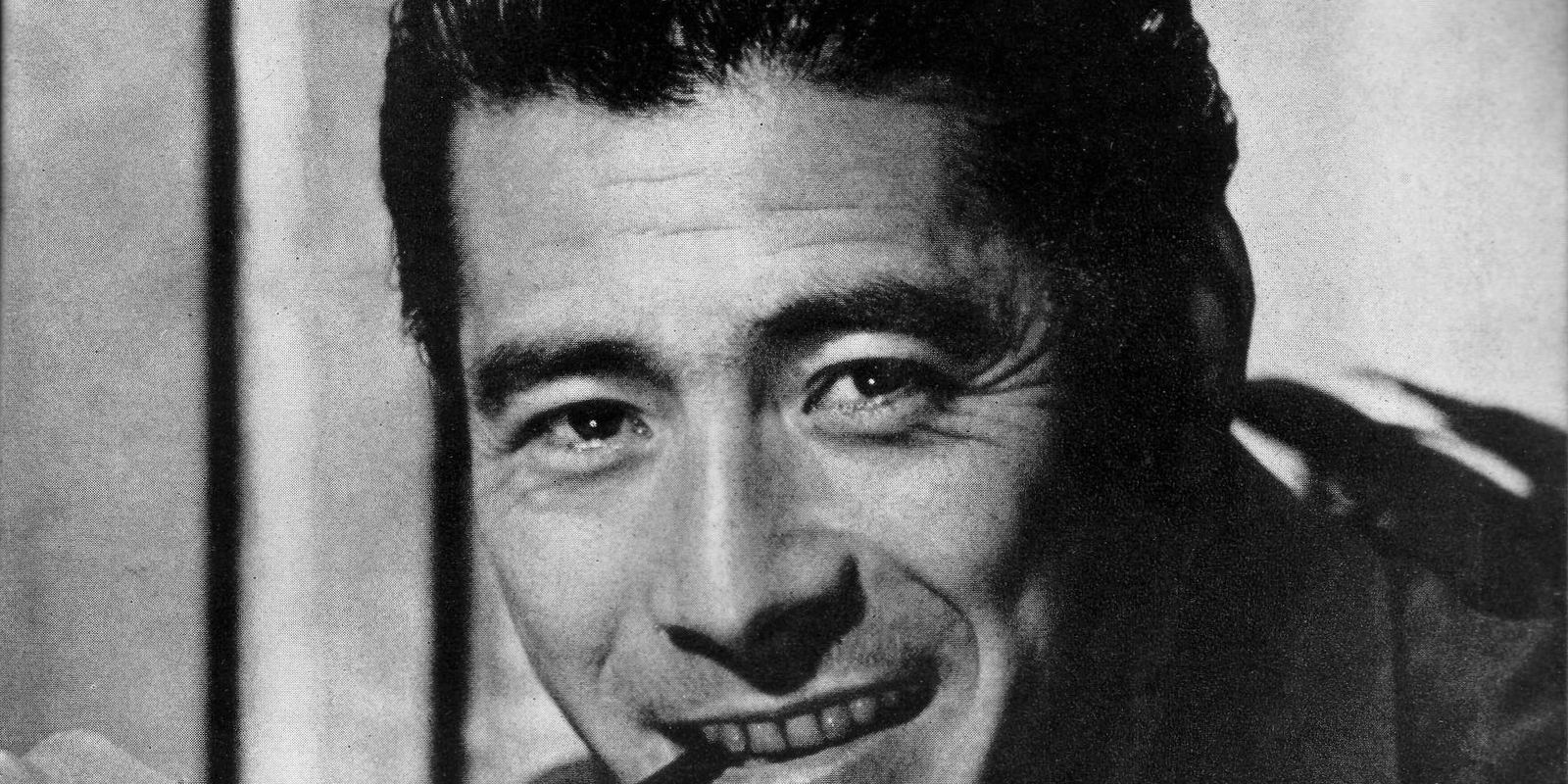
Toshiro Mifune, 1954: 映画世界社 (Eiga Sekai Publications, Inc.), Public domain
An accidental actor
Toshiro Mifune was born to Japanese parents in Qingdao, China, where his father ran a photography business. After moving to Japan he hoped to work behind the camera. In 1947 Toho held a talent search for new faces, and Mifune's photo ended up in the pile. At the audition his wild, restless energy split the judges, but director Akira Kurosawa saw something special.
Rashomon opens the door
Kurosawa first cast him as a young gangster in Drunken Angel (1948). Then came Rashomon (1950), a story told from four conflicting points of view, with Mifune as a bandit who prowls like an animal. The film won the Golden Lion at the Venice Film Festival in 1951 and an honorary Oscar, and Western audiences suddenly paid attention to Japanese film.
Sixteen films together
Mifune and Kurosawa made 16 films together, including Seven Samurai (1954), Throne of Blood (1957), The Hidden Fortress (1958), Yojimbo (1961), Sanjuro (1962), High and Low (1963) and Red Beard (1965). Mifune won the Volpi Cup for Best Actor at Venice for both Yojimbo and Red Beard.
His style mixed big physical movement with stillness, and his lone wanderer in Yojimbo influenced Western films made in Italy and Hollywood in the following years.
A producer and international star
Mifune founded his own company, Mifune Productions, in 1962 and worked with directors outside Japan, appearing in French, American and Mexican productions. He was one of the first Japanese actors widely recognised around the world, and he remained busy into the 1990s.
Legacy
Mifune died in 1997. A documentary, Mifune: The Last Samurai (2015), traced his career, and he received a star on the Hollywood Walk of Fame in 2016. Film schools still use his scenes with Kurosawa to teach how an actor can fill the frame. For the festival where his career went global, read our Venice Film Festival page.
Where to start
Rashomon (1950) is the natural first step and is short enough for a single evening. Then try Yojimbo (1961), where Mifune's wandering hero walks into a town divided between two gangs, and High and Low (1963), a modern crime drama in which he plays a businessman facing a terrible choice. Red Beard (1965), their last film together, shows a calmer, wiser Mifune as a country doctor.
Did you know? Kurosawa said Mifune could express in a few feet of film what other actors needed much longer to show.
- Toshiro Mifune, 1954: 映画世界社 (Eiga Sekai Publications, Inc.), Public domain
Text written by Amazing Movie Star.